
Power Grid Failures During Extreme Weather: Why Decentralized Solar Systems Are the Future of Infrastructure Resilience
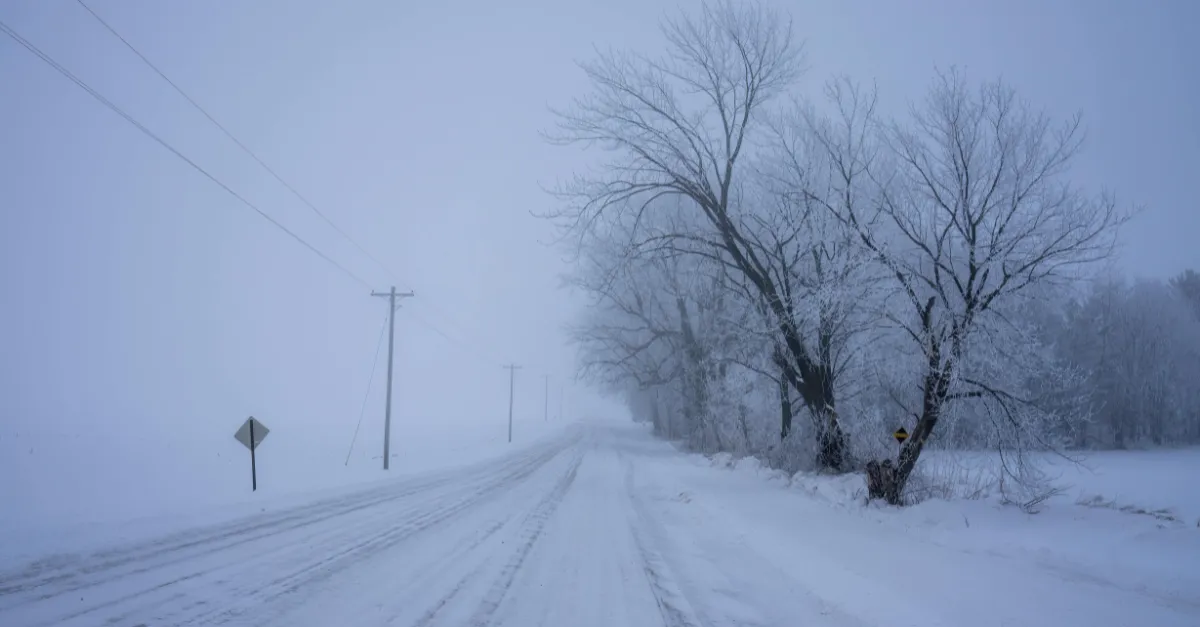
I watched the outage maps light up red across the Northeast last week. Over 650,000 customers lost power during the bomb cyclone. Some waited days in subfreezing temperatures while utility crews tried to navigate impassable roads and downed trees.
The storm peaked at 966 millibars. Providence recorded 37.9 inches of snow—the biggest snowstorm on record for the city. Wellfleet saw wind gusts hit 98 mph.
But here's what strikes me as an engineer who designs critical infrastructure: this wasn't a surprise.
The failures were predictable. The cascading outages followed patterns we've seen before. And the recovery timeline stretched because the same conditions that caused the damage prevented the repairs.
This is what happens when you design systems without accounting for what actually breaks them.
The Grid Fails Where It's Most Exposed
About 70 percent of U.S. power outages occur at the distribution level—the lines running along streets and connecting to buildings. This infrastructure sits exposed to wind, ice, falling trees, and every other weather event that comes through.
Massachusetts bore the brunt with over 190,000 customers still without power days after the storm passed. New Jersey deployed 5,000 utility crews. Atlantic City Electric warned that some heavily damaged areas wouldn't see restoration until Friday.
The math is straightforward. Between 2018 and 2020, 73% of counties saw at least one day when severe weather and power outages coincided. More than half experienced two simultaneous natural events during an outage.
The grid architecture creates single points of failure that compound across interconnected systems. When one section goes down, the stress redistributes. Load imbalances trigger protective shutdowns. What starts as localized damage spreads.
I've seen similar cascading failures in solar projects. A poor front-end design decision—undersized conduit, inadequate structural analysis, wrong equipment specification—creates problems that multiply during installation, permitting, and long-term operation.
The difference is scale. When a solar system fails, one facility loses power. When the grid fails, entire regions go dark.
Extreme Weather Isn't an Edge Case Anymore
By mid-2025, 45% of U.S. utility customers had experienced at least one outage. Nearly half were attributable to extreme weather. The average duration of the longest outage climbed to 12.8 hours, up from 8.1 hours in 2022.
More than one in three power outages now connects to severe weather-related incidents. The frequency increases every four-year period.
Climate projections suggest global changes could increase blackout risks during peak hours by 4-6%. Over 20% of the U.S. requires at least a 10% distribution grid capacity increase before 2050. Six states need increases exceeding 20%.
We're designing for conditions that no longer represent the baseline. The assumptions built into existing infrastructure—about storm frequency, wind speeds, snow loads, temperature extremes—reflect historical patterns that have shifted.
This creates a fundamental engineering problem. You can't retrofit resilience into systems designed for different operating parameters. The infrastructure either accounts for these conditions from the start, or it fails when they arrive.
And they keep arriving.
Decentralized Systems Restructure Risk
I design commercial and industrial solar systems. My clients include manufacturing facilities, distribution centers, data centers, and other operations where downtime costs millions.
For these facilities, backup power isn't an environmental choice. It's an operational necessity.
When you pair solar generation with battery storage at the facility level, you eliminate dependency on vulnerable transmission infrastructure. The system operates independently during grid outages. Production continues. Critical equipment stays online. Revenue doesn't stop.
A semiconductor fabrication facility in Arizona implemented a 15 MW solar microgrid that reduced annual energy costs by $2.3 million while providing backup power for critical production equipment. The system achieved payback in seven years.
During the February 2021 Texas winter storm, distributed generation paired with energy storage kept electricity flowing to facilities while nearly 10 million homes lost power for days. Behind-the-meter battery systems connected to solar farms assisted grid operators in maintaining stability throughout the outage period.
The advantage isn't just backup capacity. It's the fundamental restructuring of where risk lives in the system.
Centralized grids concentrate vulnerability at transmission and distribution points. Weather events that damage these networks cascade across entire regions. Recovery requires accessing damaged infrastructure, often in the same conditions that caused the damage.
Distributed systems localize both generation and risk. A storm that knocks out regional transmission leaves facility-level systems operational. The building maintains power because it doesn't depend on infrastructure miles away.
The Engineering Question Nobody Wants to Answer
Here's what I've learned from years of standing on the roofs I now design for: there's a massive gap between "code compliant" and "actually resilient."
Drawings that pass permit review aren't the same as systems that perform under real conditions. You can meet every technical requirement and still build something that fails when conditions exceed design assumptions.
The same gap exists in grid infrastructure. Utilities meet regulatory standards. Systems pass inspections. But when a bomb cyclone dumps three feet of snow with hurricane-force winds, compliance doesn't keep the lights on.
Simulations show that targeted interventions—isolating critical nodes and protecting vulnerable points from transient faults—could reduce customer outages by 45.5% and 49.5% respectively. But these interventions require upfront investment in infrastructure that won't generate immediate returns.
The question becomes: who pays for resilience before the next storm proves we needed it?
Commercial and industrial facilities answer this differently than residential customers. A manufacturing plant losing power for 12.8 hours doesn't just experience inconvenience. It experiences measurable financial loss, potential equipment damage, supply chain disruption, and reputational risk.
This changes the investment calculus. Solar microgrids typically range from $2,500 to $6,000 per kilowatt of installed capacity. Many systems achieve payback periods of 5-10 years for commercial applications.
But the real value isn't the payback period. It's the elimination of downtime risk during grid failures.
What Most Firms Miss About Distributed Energy
The distributed energy resource management system market is projected to reach $1.44 billion by 2029, growing at 18.8% annually. North America leads adoption, with utilities modernizing grid networks to improve resilience against outages and extreme weather.
But market growth doesn't guarantee quality implementation.
I see the same pattern in solar engineering that I saw in installation: firms that treat distributed generation as a product rather than a system. They focus on equipment specifications without understanding installation realities. They design for ideal conditions without accounting for what degrades performance over time.
Distributed systems only restructure risk if you design them correctly from the start. That means:
Understanding how weather affects both generation and structural loads
Designing for maintenance access under real site conditions
Specifying equipment that performs at the extremes, not just the averages
Planning for the second-order effects that cascade from component failures
Front-loading the engineering rigor that prevents revision cycles later
Most firms learn these lessons after projects fail. The permit gets rejected. The system underperforms. The client discovers hidden costs during operation.
We learned them on roofs before we started drawing them.
Infrastructure Reveals What We Actually Value
The bomb cyclone knocked out power to 650,000 customers. Utilities deployed thousands of crews. Recovery took days in subfreezing conditions.
This is what infrastructure failure looks like at scale.
But the real question isn't how to recover faster. It's whether we're willing to design systems that don't fail this way in the first place.
Centralized grids made sense when we built them. They reflected the technology, economics, and climate patterns of their era. But those conditions have changed.
Distributed generation technology has matured. Battery storage costs have dropped. Extreme weather frequency has increased. The risk calculus for commercial and industrial facilities has shifted.
The infrastructure decisions we make now determine what breaks during the next storm. And the next one after that.
I design systems that keep critical facilities operational when the grid goes dark. That's not a marketing position. It's a recognition that infrastructure either accounts for what actually breaks it, or it becomes the thing that breaks.
The grid went dark last week because weather exceeded design assumptions. It will happen again. The only question is whether we're building the infrastructure that operates when it does.
Because in the end, infrastructure isn't about what works under ideal conditions.
It's about what still works when everything else fails.