
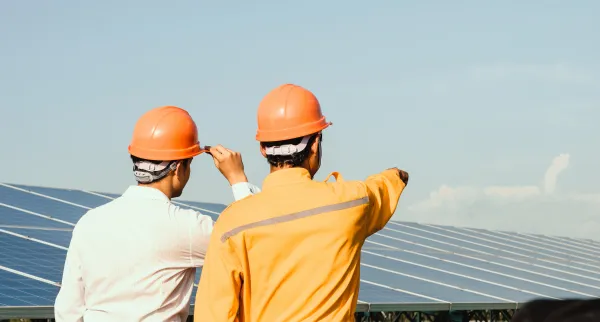
The Importance of Collaboration Between Engineers and Contractors in Commercial Solar Projects
Introduction
Commercial solar lives inside active businesses. Work happens over loading docks, in parking lots, on occupied roofs, and inside electrical rooms that keep operations running. That reality changes the playbook. Success depends on tight collaboration between engineers and contractors with a coordinator who manages decisions, information, and access. That is where Jolt focuses its effort.
This guide covers the collaboration points that matter most in commercial projects and the way Jolt runs them.
Guide
Why collaboration matters in commercial
• Facilities must remain operational. Shutdown windows are narrow and must be scripted in advance.
• Roofs have warranties, live loads, and access rules. Structural and roofing coordination cannot wait.
• Parking canopies affect ADA paths, fire lanes, snow removal, and traffic management.
• Electrical work must fit existing gear, clearances, and utility metering standards.
• Incentive paperwork and record drawings must be complete and audit‑ready.
Where projects stumble without coordination
Structural and roofing alignment
Ballasted versus attached decisions land late. Roof warranty terms are unclear. Anchors, pavers, and walkway paths are not reconciled with the roof plan.
Electrical integration inside live facilities
Existing service ratings, CT cabinets, and switchgear clearances are misread. Shutdowns collide with business hours.
Utility and code details
Rapid shutdown, fire department pathways, and access clearances are not locked early. Utility telemetry and metering rules drift during review.
Procurement versus submittals
Approved manufacturers lists do not match lead times. Equivalency reviews start after orders are placed.
Change control
Field conditions are discovered late. Decisions lack a single record of scope, cost, and schedule impact.
Lifecycle playbook for commercial projects
1) Pre‑design and site discovery
Goals: confirm roof and parking constraints, electrical realities, and business operations.
Actions
• Joint roof walk with structural review, core samples if needed, and warranty verification
• Electrical room survey with gear photos, nameplates, and space checks
• Utility pre‑application to validate metering and telemetry needs
• Parking and traffic study for canopy work with ADA and fire lane requirements
Artifacts
• Basis of design with roof loading limits, equipment weights, and access rules
• Decision log that records trade‑offs and owners
2) Design and constructability
Goals: produce drawings that can be built without rework.
Actions
• Constructability reviews at 30, 60, and 90 percent with closed comments
• Conduit routing and trench details that avoid business‑critical areas
• Rapid shutdown, signage, and fire access confirmed with the AHJ
Artifacts
• Marked plan sets and a resolved comment register
• Shutdown playbook with step‑by‑step responsibilities
3) Procurement and submittals
Goals: align specs, lead times, and alternates before orders.
Actions
• Approved manufacturers list with viable alternates and warranty terms
• Submittal register with due dates, owners, and response targets
• Factory witness plans for critical gear when risk justifies the time
Artifacts
• Submittal tracker with statuses and blockers
• Traceability documents and warranty files for investor review
4) Construction in an active facility
Goals: build safely and maintain operations.
Actions
• Daily huddles and a rolling look‑ahead that shows crane days and shutdowns
• Inspection and test plans with photo‑verified hold points
• RFI dashboard with aging, owners, and escalation
• Joint safety walks that track leading indicators and close rates
Artifacts
• As‑built markups maintained continuously
• Nonconformance log with corrective actions and verification
5) Commissioning and turnover
Goals: first‑time pass on tests and complete records.
Actions
• Commissioning plan with responsibilities and acceptance thresholds
• Energization checklist for isolation, protection settings, and telemetry checks
• O&M training with procedures, spares, and vendor contacts
• Digital turnover of drawings, test results, warranties, and credentials
Artifacts
• Final package that satisfies owner, lender, and utility requirements
• Lessons learned captured for the next site
Final thoughts
Commercial solar is an integration exercise inside a living facility. Collaboration between engineers and contractors is not optional. With Jolt coordinating preconstruction, documentation, safety, and commissioning, teams protect operations, control risk, and deliver investor‑ready assets on time.