
BESS Engineering Services for Commercial Solar and Storage Projects
Adding battery storage to commercial solar changes the engineering complexity. The decisions you make about AC vs DC coupling, interconnection approach, and system sizing determine whether the project delivers the financial returns your client expects, or underperforms for decades. Commercial solar paired with storage can strengthen decentralized solar systems by supporting local loads, reducing dependence on a single grid pathway, and improving resilience during outages.
Jolt's BESS design services address AC- and DC-coupled system architecture, NEC 706 requirements, NFPA 855 fire-safety considerations, and utility-ready integration drawings for commercial solar projects.
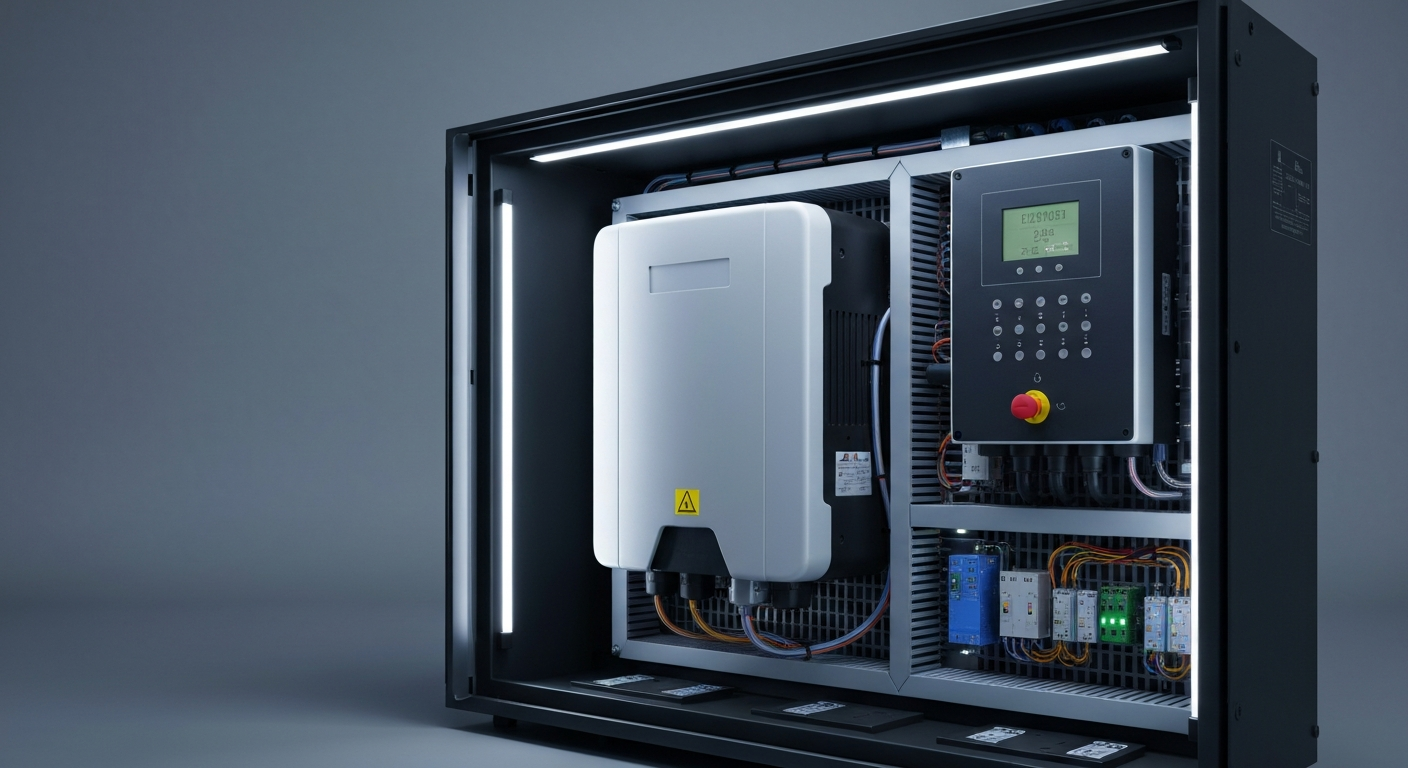
Most BESS Failures Happen During Design, Not During Installation
Battery storage systems operate for 25 years. The design decisions made at the beginning, AC vs DC coupling, interconnection approach, system sizing, energy management configuration, determine whether the project delivers its projected returns or becomes a financial liability when performance guarantees come due.
Most BESS integration failures don't happen during installation. They happen during design, when fundamental decisions get made without understanding how those decisions affect long-term performance.
I've designed BESS systems where the engineering choices prevented expensive field modifications. I've also reviewed systems designed by firms that treated storage as an add-on to their solar work, and the consequences show up three years in, when the developer is stuck with underperforming assets and no clear path to resolution.
"BESS system lifespan is 25 years. Every design decision you make today lives with that asset for a quarter century."
What Every BESS Plan Set Includes
AC & DC-Coupled System Engineering
We design both coupling configurations and recommend the right approach for your project based on grid requirements, equipment selection, and financial objectives.
NEC & NFPA 855 Compliance
Every BESS engineering services plan set is engineered to NEC Article 706 and NFPA 855 fire safety requirements, including separation distances, ventilation, and suppression documentation.
PE-Stamped Plans & Integration Diagrams
Stamped by a licensed Professional Engineer. Includes system integration diagrams, point of interconnection drawings, and control schematics.
UL 9540A Fire Safety Layouts
Thermal runaway propagation analysis and fire safety layouts required by AHJs for commercial BESS installations.
Energy Management System Configuration
EMS misconfiguration is one of the top causes of storage underperformance. We document EMS settings and operating logic as part of every BESS design scope.
Storage Vendor Collaboration
We work directly with your BESS vendor, Fluence, Tesla, SunPower, or others, to ensure engineering specs align with equipment requirements before permit submission.
AC vs DC Coupling: Getting the Decision Right
AC-Coupled BESS
- •Inverter-to-inverter connection, more flexible for retrofits
- •Independent charge/discharge from solar production
- •Better for time-of-use optimization and grid services
- •Additional inverter adds cost and conversion losses
- •Preferred for larger commercial and utility-scale systems
DC-Coupled BESS
- •Shared inverter reduces equipment cost
- •Higher round-trip efficiency, fewer conversion stages
- •Better for maximizing self-consumption behind the meter
- •More complex if retrofitting to existing solar arrays
- •Preferred for new-build commercial solar + storage
"The right choice depends on your grid connection, your client's revenue model, and your equipment selection. We map this decision during kickoff, before a single line is drawn."
The Code Stack That Governs Commercial BESS
Three code bodies interact on every commercial storage project. Missing the intersections is where expensive problems start.
NEC Article 690
Governs the solar PV system. Wiring methods, overcurrent protection, disconnects, and rapid shutdown requirements. The foundation of every solar plan set.
NEC Article 706
Governs the energy storage system. Covers ESS installation, disconnecting means, interconnection, and the specific requirements for battery technologies. Most solar engineers underestimate how different 706 is from 690.
NFPA 855 & UL 9540A
Fire safety standard for stationary energy storage systems. Governs maximum allowable quantities, separation distances, ventilation, detection, and suppression requirements. AHJs increasingly require UL 9540A thermal runaway testing documentation.
BESS Engineering: Common Questions
Designing a BESS Project?
"Battery storage changes every design decision downstream. Let's map your coupling approach, interconnection strategy, and code compliance requirements before you commit to an equipment selection."