Where Should You Not Place Solar Panels? Spots to Avoid
Table of Contents
- Where should you not place solar panels?
- Solar panels in shade: the first place to avoid
- North facing solar panels and other roof directions
- Solar panel roof requirements: age, structure and obstructions
- Old roofs and weak structure
- Solar panel placement on roof: chimneys, overhangs and roof peaks
- Where to install solar panels on the ground
- Frequently asked questions
- Can you put solar panels on any roof?
- Can solar panels be installed in the shade, and how much power do they lose?
- Are north-facing solar panels worth it in the US?
- Should you replace an old roof before installing solar panels?
- Do solar panels have to be on the roof?
- The Bottom Line: choose a clear, sound, south-leaning surface
- Where to place solar panels on your next project
Where should you not place solar panels? Avoid shaded areas first, then roofs that are near the end of their life, roofs that cannot carry the racking, and ground spots over septic systems, wells or fire access routes. If you are asking where not to put solar panels, those are the places that cost you output or extra expense later.
Key takeaways
- Shade is the first thing to rule out, because a small shaded share of an array can cut its output sharply.
- A roof that is old or cannot support the racking is a bad fit until it is fixed.
- Ground mounts have their own no-go zones, from septic areas to fire access.
In this guide
- Where should you not place solar panels?
- Solar panels in shade: the first place to avoid
- North facing solar panels and other roof directions
- Solar panel roof requirements: age, structure and obstructions
- Frequently asked questions
- The Bottom Line: choose a clear, sound, south-leaning surface
- Where to place solar panels on your next project
Where should you not place solar panels?
The bad places for solar panels fall into four groups: shaded surfaces, roofs that are too old or too weak, directions outside the range where the U.S. Department of Energy says panels can work well, and ground areas that are already spoken for. The guidance cited here is written mostly for homes and ground-mounted sites. A commercial roof still needs its own review of the building, the AHJ and the utility.
Here is the short version, with the source behind each row.
| Location | Why it is a problem | Source |
|---|---|---|
| Shaded roof or ground area | Shade reduces output, and trees can make rooftop panels a poor option | DOE, Ohio State Extension |
| Roof near replacement | Age can make a roof unsuitable, and replacing it later adds cost | DOE, University of Illinois Extension |
| Roof that cannot carry the load | The roof has to support the panels and the racking structure | DOE |
| Surface outside southeast to southwest | DOE says that range can work well, and south-facing roofs perform best | DOE |
| Ground over septic systems or wells | Ground mounts should not sit over these areas | Ohio State Extension |
Solar panels in shade: the first place to avoid
Ohio State University Extension says that finding a location with no shading can optimize a system's performance. The University of Illinois Extension describes south-facing roofs without significant shading as ideal.
The loss is not proportional to the shaded area. Penn State Extension notes that a 50 percent drop in efficiency can occur with even 10 percent shading of an array.
Shade can cost far more output than the share of the array it covers.
The Department of Energy also warns that overhangs, chimneys and adjacent roof peaks can cast shadows that cut power generation. If trees near the building shade the roof excessively, DOE says rooftop panels may not be the most ideal option. In that case, look at another surface or a ground mount instead of forcing the array onto the roof.
Before you commit to a layout, run through this list:
- Check the roof for shadows from trees, neighboring buildings and rooftop equipment.
- Look for overhangs, chimneys and adjacent roof peaks that shade the planned area.
- Compare more than one possible surface for the array.
- Ask for a site assessment that accounts for shading before design starts.
- Move or drop any panel position that sits in a shaded spot.
North facing solar panels and other roof directions
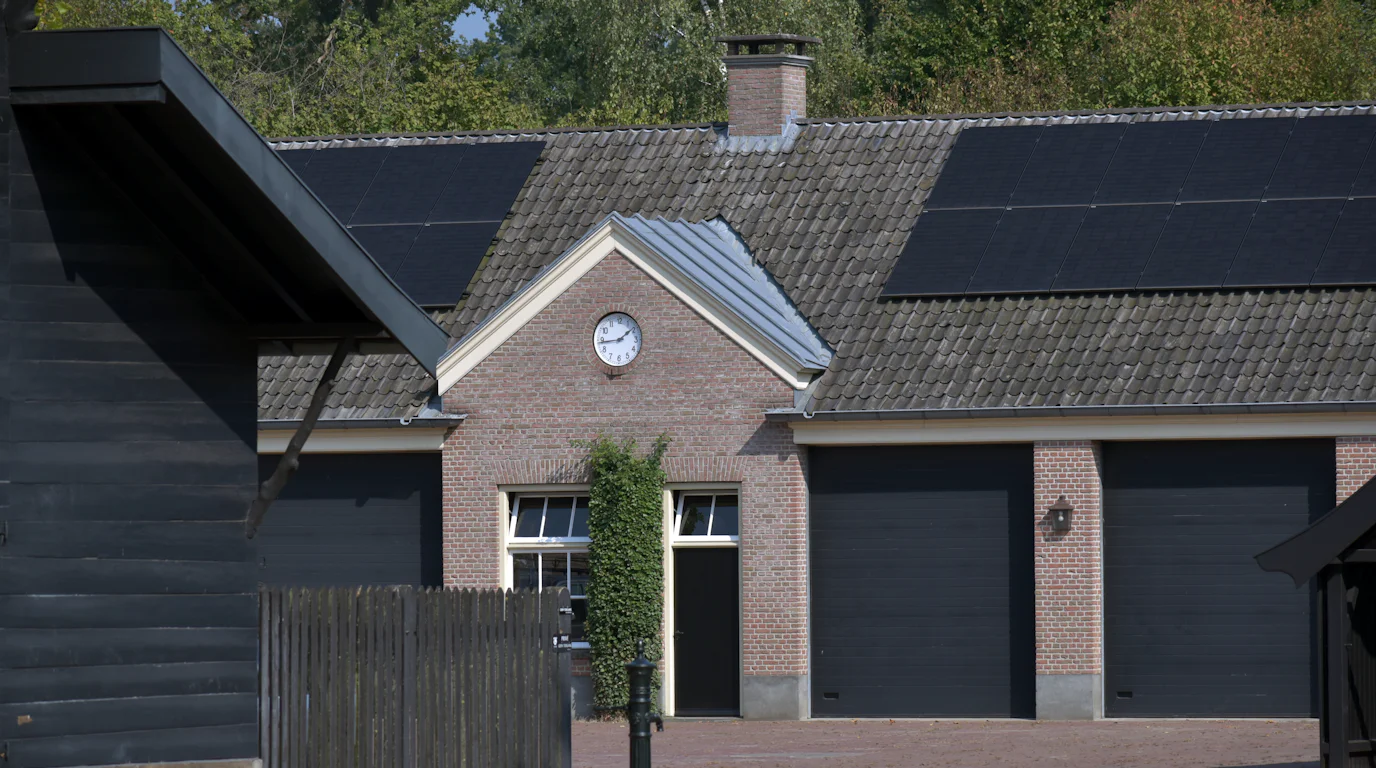
North facing solar panels are the next thing to question. DOE says panels typically perform best on unshaded, south-facing roofs with a slope between 15 and 40 degrees, and that any orientation between southeast and southwest can work well. A north-facing surface sits outside that range.
The DOE guidance gives no loss figure for north-facing panels, so none is cited here. What it does support is a priority order. Fill the south-leaning surfaces first, and treat a north-facing roof plane as a last choice that needs a real site assessment behind it, not as a default.
Slope matters too. DOE lists the size, shape and slope of the roof as important factors. If the slope of a roof falls outside the 15 to 40 degree range, check it before you count that area as usable.
Not sure a roof or site will work?
Send us the location and what you know about the roof, and we will talk through the engineering.
Solar panel roof requirements: age, structure and obstructions
Solar panel roof requirements come down to three questions: how old the roof is, whether it can carry the system, and what is sitting on it.
Old roofs and weak structure
DOE says some rooftops are not suitable for solar because of their age or tree cover, and that you should consider how long until the roof needs replacement. The University of Illinois Extension gives the fix: if the roof will need replacing soon, upgrade it before installing solar to avoid extra costs later.
Structure is the other half. DOE says the roof should be able to support the panels and a racking structure, so ask for that to be confirmed rather than assuming it. On a commercial building, ask the PE who designs the system to confirm it.
Solar panel placement on roof: chimneys, overhangs and roof peaks
For solar panel placement on roof planes with obstructions, DOE names chimneys, overhangs and adjacent roof peaks as sources of shadow. Keep the array off the area those obstructions shade. Ask the local AHJ which rules apply to the roof you are working on before you fix the layout. Our post on designing solar projects for constructability, not just compliance goes deeper on that side of the design, and you can find more in the Jolt Engineering blog.
Where to install solar panels on the ground
If the roof is a bad fit, a ground mount is an option, but it has its own list. Where to install solar panels on the ground depends on avoiding these areas:
- Septic areas: Ohio State Extension says to avoid septic systems and areas set aside for replacement septic systems.
- Water wells: The same guide says to identify wells so the array is not located over them.
- Fire and rescue access: Do not block access to buildings on the property.
- Floodplains and wetlands: Penn State Extension says solar developers prefer to avoid them.
- High wind and snow risk: Penn State also lists sites with higher-than-average tornado, snow load and wind risk.
Sources: U.S. Department of Energy, homeowner's guide to solar, University of Illinois Extension, Ohio State University Extension (Ohioline) and Penn State Extension.
Frequently asked questions
Can you put solar panels on any roof?
No. DOE says some rooftops are not suitable because of age or tree cover, and the roof has to support the panels and racking. Size, shape and slope also matter. A professional site assessment checks orientation, pitch, structure and shading before installation, and it tells you whether a given roof works.
Can solar panels be installed in the shade, and how much power do they lose?
They can be installed, but it is a poor choice. Penn State Extension notes a 50 percent drop in efficiency can occur with even 10 percent shading of an array. Exact losses depend on the system, so have the shading checked on your site before you lay out the array.
Are north-facing solar panels worth it in the US?
Usually they are a lower priority. DOE says panels typically perform best on south-facing roofs, and that southeast to southwest can work well. No verified loss figure for north-facing surfaces is cited here, so get a site assessment before counting on one.
Should you replace an old roof before installing solar panels?
If the roof will need replacing soon, the University of Illinois Extension says to upgrade it before installing solar to avoid extra costs later. DOE also tells owners to consider the roof's age and how long until it needs replacement.
Do solar panels have to be on the roof?
No. Ground-mounted systems are an option when the roof is shaded or unsuitable. They need a clear spot that avoids septic systems, wells and fire and rescue access, according to Ohio State Extension. DOE also notes rooftop panels may not be ideal when trees shade the roof.
The Bottom Line: choose a clear, sound, south-leaning surface
- Rule out shade first. Even a small shaded share of an array can cost a large share of its output, according to Penn State Extension.
- Do not build on a roof that needs work. Replace an aging roof before installing, and confirm the structure can carry the racking.
- Put the array where the sun is. DOE points to unshaded, south-facing roofs, with southeast to southwest also working well.
- Check the ground before you mount on it. Septic areas, wells, fire access, floodplains and wetlands are off the list.
- Get a site assessment. It covers orientation, pitch, structure and shading.
Where to place solar panels on your next project
If you are working out where to place solar panels on a commercial building or site, start with the same questions: what shades the area, what the roof can carry, and which surfaces face the sun. At Jolt Engineering, we develop site-specific, PE-stamped engineering for commercial and industrial solar, built around the site, the utility and the AHJ from day one. Timeline depends on project size, site conditions and jurisdiction requirements and is confirmed at kickoff. You can also start from the Jolt Engineering home page.
Contact Jolt to confirm availability for your project state, and tell us what you already know about the site.
Have a site in mind?
Share the project details and we will review the site, jurisdiction and scope with you.